Our teeth consist of three main layers: enamel, dentin and pulp.
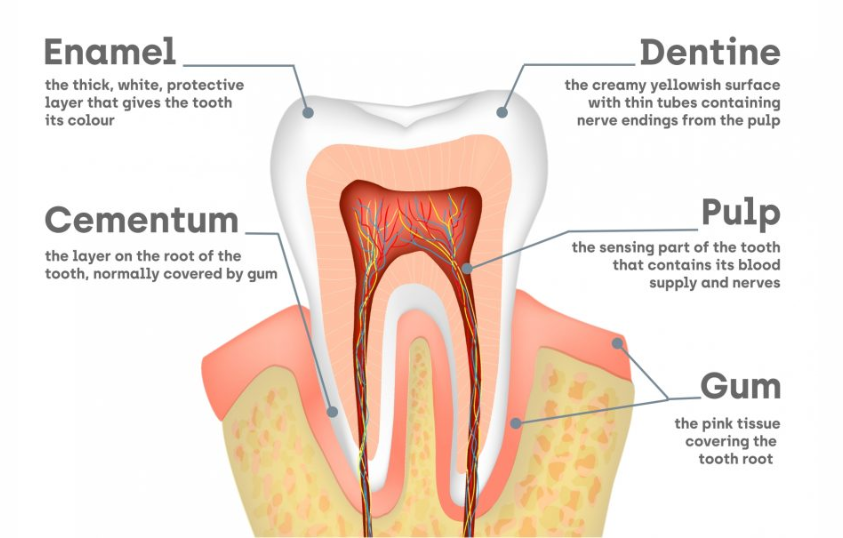
Image source: Instant Dentist
When we bite ice cream, the tooth cools rapidly. The temperature change passes through the enamel and reaches the dentin. The dentin contains millions of tiny tubes filled with fluid called dentinal fluid.
As the dentinal fluid shifts slightly, it stimulates nerve endings near the pulp. These nerves send electrical signals to the brain, and the brain interprets those signals as a sharp pain.
This mechanism is explained by the hydrodynamic theory.
But why do some people not experience this pain?
There might be several reasons for that:
- Thicker or healthier enamel
- Fewer open tiny tubes. In some people, they are naturally narrower or become partially blocked by minerals over time.
- Different nerve sensitivity
- Some toothpastes reduce tooth sensitivity
Why are children's teeth often more sensitive than adults' teeth?
As we get older, our teeth naturally produce secondary dentin. As a result, the pulp is farther away from the surface of the tooth. This makes many adults less sensitive to cold food.